
Built on Relationships,
Trusted for Results.
Business-focused intellectual property lawyers helping innovators protect, manage, and enforce their intellectual property in India.
Trusted by some of the world's most respected businesses
Global corporations, fast-growing startups and cherished local names alike trust us with the intellectual property that sets them apart.



















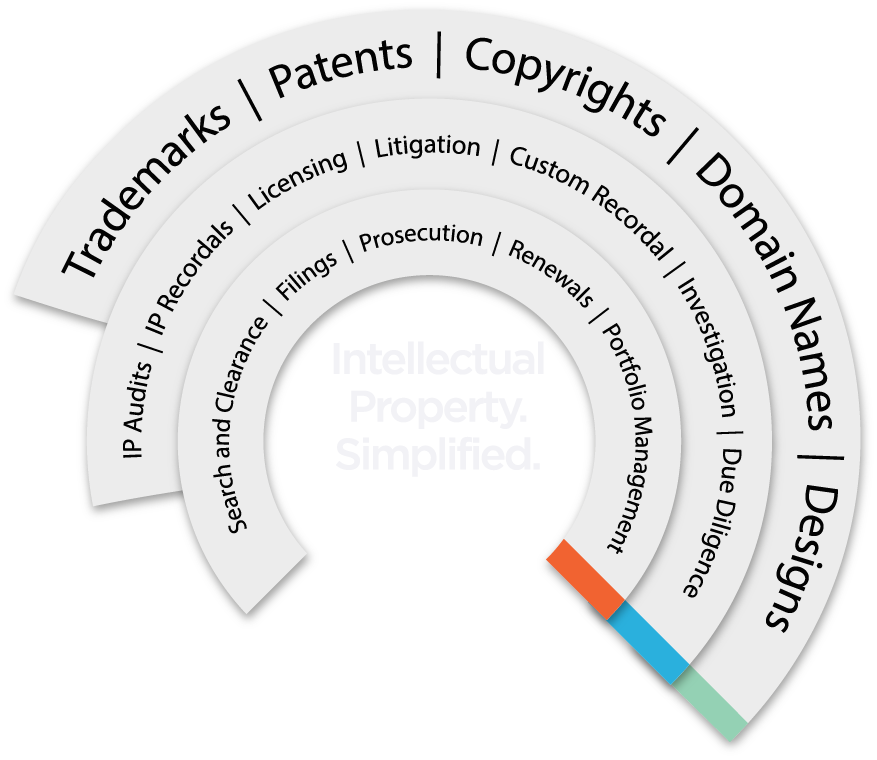
Intellectual Property, from strategy to protection.
From a single matter to a global IP portfolio, we help businesses create, protect, manage and enforce intellectual property in India and across the world.
Local depth. Regional reach.
From India to Pakistan, Sri Lanka to Bangladesh, Nepal to the Maldives, we help businesses protect, manage and enforce their intellectual property across the region. And when your portfolio extends beyond the subcontinent, we coordinate trusted counsel worldwide with you dealing with one team throughout.
- A single point of contact — no juggling multiple foreign firms.
- Multi-country filings coordinated under one clear strategy.
- Full visibility on timelines, requirements, and risk at every step.
- Consistent handling of prosecution, renewals, and enforcement.
- A hand-picked network of trusted associates beyond the region.

India
Your IP deserves more than a filing receipt.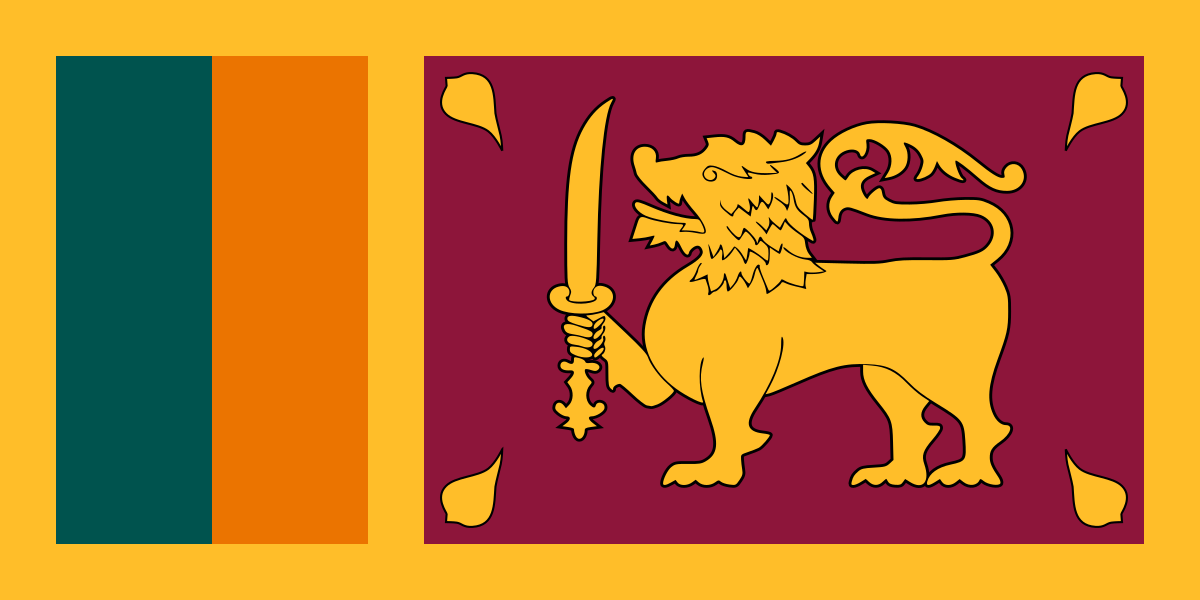
Sri Lanka
Protecting IP on the island takes local understanding.
Bangladesh
Growing markets need stronger IP protection.
Pakistan
Local knowledge. One clear strategy.
Nepal
Protecting IP at the edge of the Himalayas.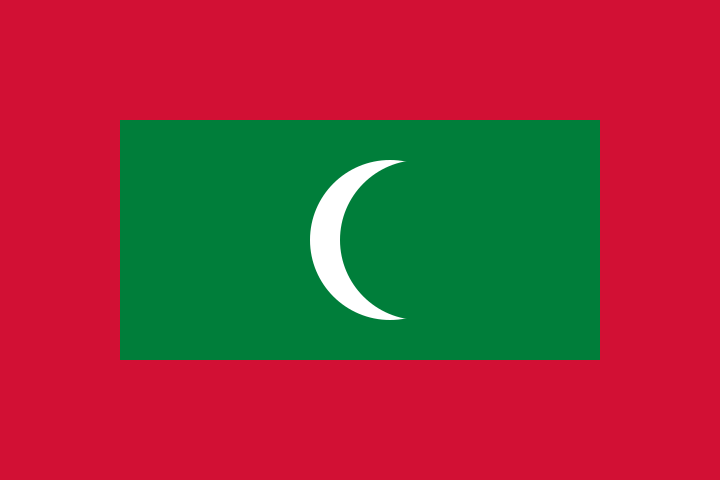
Maldives
A distinctive market needs a tailored IP strategy.
International
One IP strategy. Multiple borders.
In the words of those who trust us with their work
- ★★★★★
Highly knowledgeable, professional and dedicated. They took the time to understand our requirements and provided a tailored approach. Exceptional expertise in IP, trademarks and copyright.

Naveen ValsakumarCEO, NotionPress
- ★★★★★
Knowledgeable, accessible and trustworthy. They understand the needs of Indian startups and corporates and provide comprehensive, practical advice.

Arunprasad DurairajCEO, FlintoBox
- ★★★★★
The best of the best — responsive, creative, efficient and organised, and leaps and bounds ahead of other trademark firms in the region.

Caitlin ByczkoBarnes & Thornburg, USA
- ★★★★★
Highly professional, timely and responsive — particularly important when working across different time zones.

Lorraine PinsentMLT Aikins, Canada